

Are Christians really better off than everyone else?
When you look at the data, clear patterns begin to show.
It’s comforting to know that when we follow the Lord’s guidance, we are rewarded with a good life.
In this post, you will see 25 clear charts that bring all of this evidence together in one place.
20. Christians are Happier
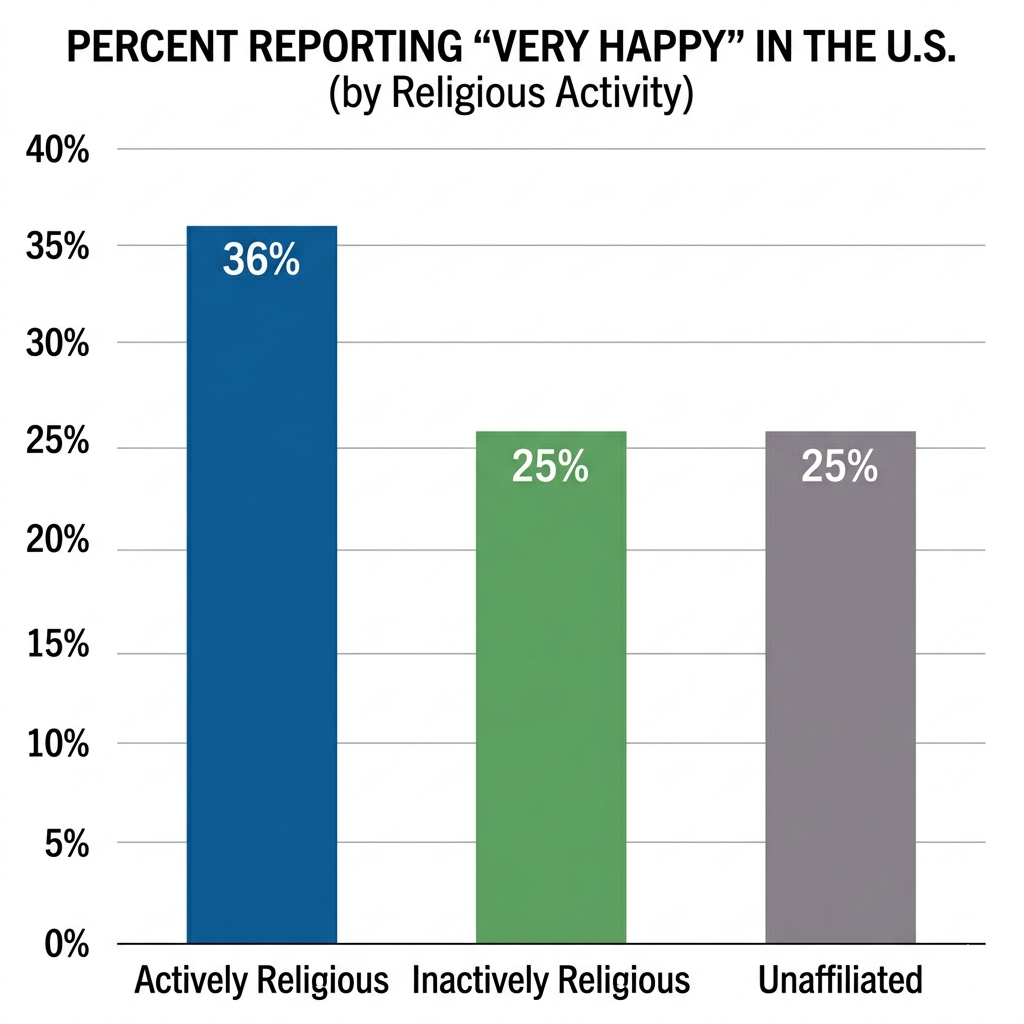
Research from Pew Research Center shows a clear link between religious activity and happiness.
In the United States, people who are actively religious report higher life satisfaction.
About 36% of actively religious people say they are “very happy.” By comparison, only 25% of inactively religious people say the same. The same 25% figure also applies to people with no religious affiliation.
This creates an 11-point gap between active and less active groups.
19. Religious People have Higher Life Satisfaction
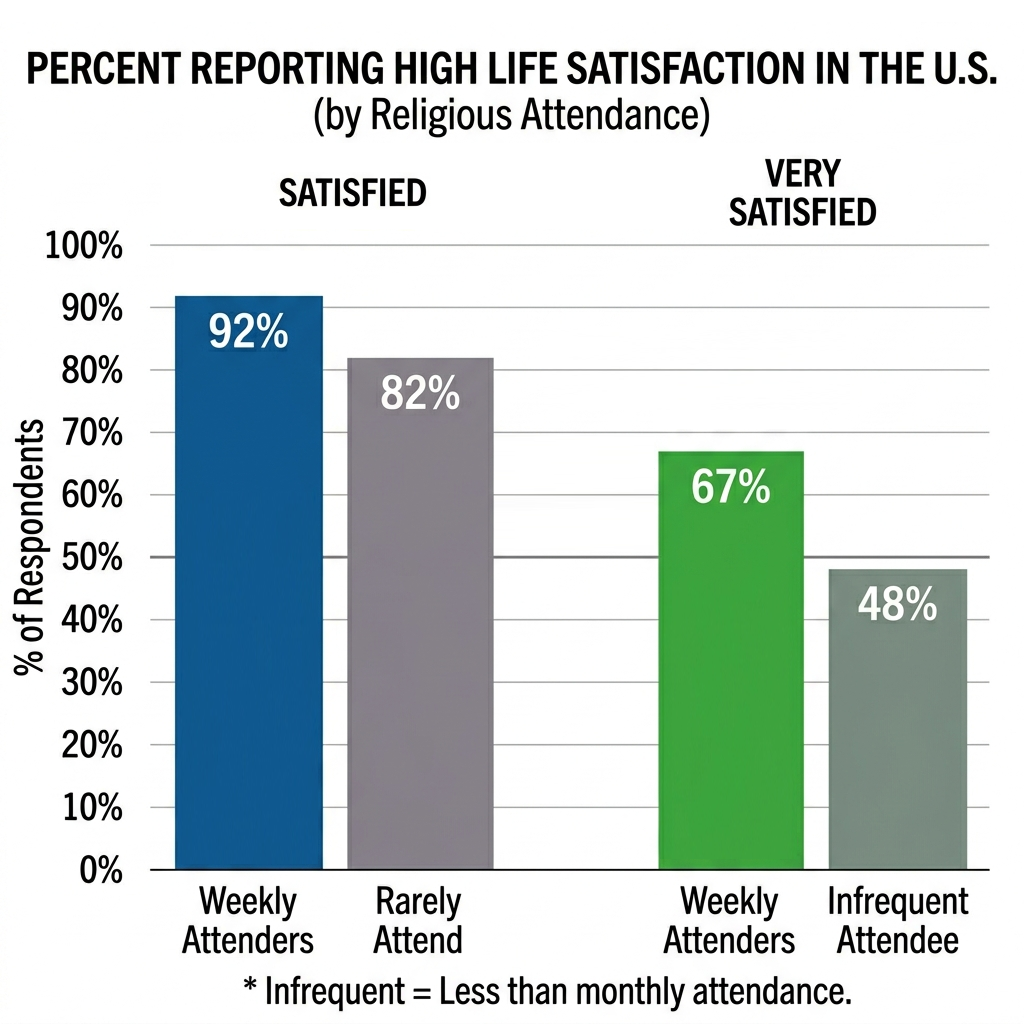
Research from Gallup shows a strong link between religion and overall happiness.
About 92% of weekly attenders say they are satisfied, compared to 82% of those who rarely attend. The gap is even larger for those who say they are “very satisfied.”
Around 67% of weekly attenders say they are very satisfied with life. Only about 48% of infrequent attenders say the same.
18. Religious people have Lower Rates of Depression
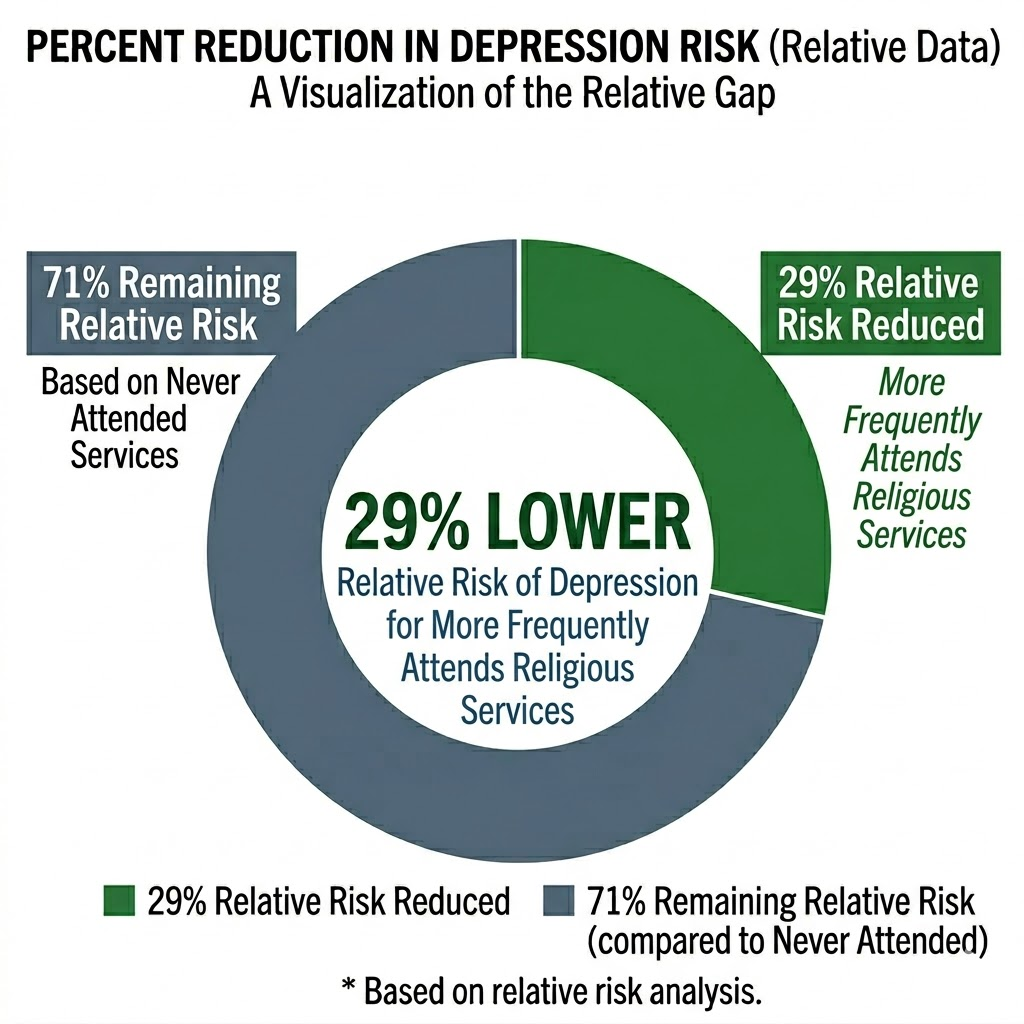
Research from Harvard T.H. Chan School of Public Health shows a link between religious participation and lower depression.
Women who attended services more than once per week had about a 29% lower risk of depression. This was compared to women who never attended services.
Researchers also found similar patterns for men.
One reason may be the social support found in religious communities. Another reason may be a stronger sense of meaning and purpose.
17. Religious people have Higher Sense of Purpose
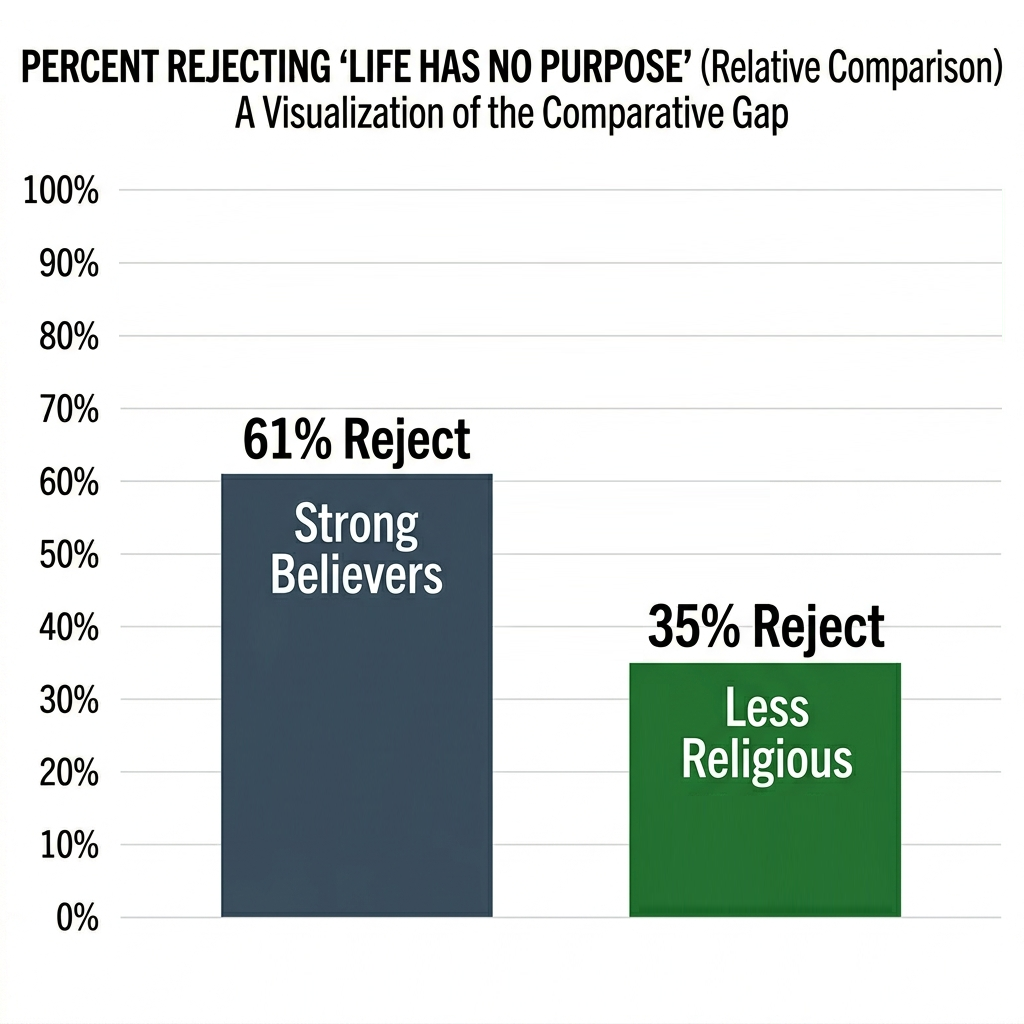
Research from Pew Research Center shows a strong link between religion and a sense of purpose.
Many people say religion gives their life meaning and direction.
61% of people with strong belief in God strongly disagreed that life has no purpose. This is higher than people who are less certain in their beliefs.
These patterns suggest that religion helps people feel their lives have meaning.
16. Religious People have Higher Levels of Hope
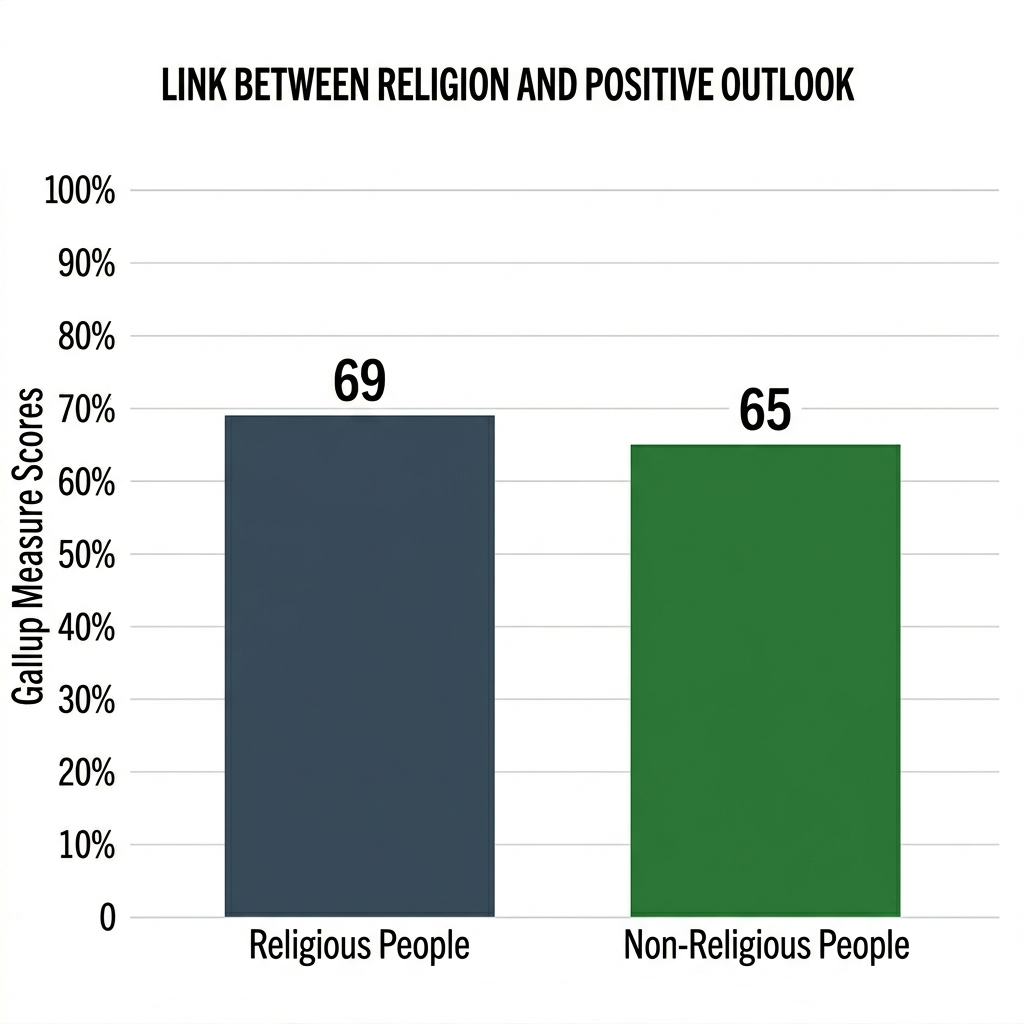
Research from Gallup shows a clear link between religion and higher levels of hope.
Gallup measures hope through optimism about the future and positive life outlook. Across global data, more religious people tend to report higher optimism.
This comes from surveys of about 1.5 million people across over 150 countries.
Religious people scored 69 on positive experience, compared to 65 for non-religious people. This gap represents millions more people experiencing positive emotions worldwide.
15. Christians Cope Better with Stress
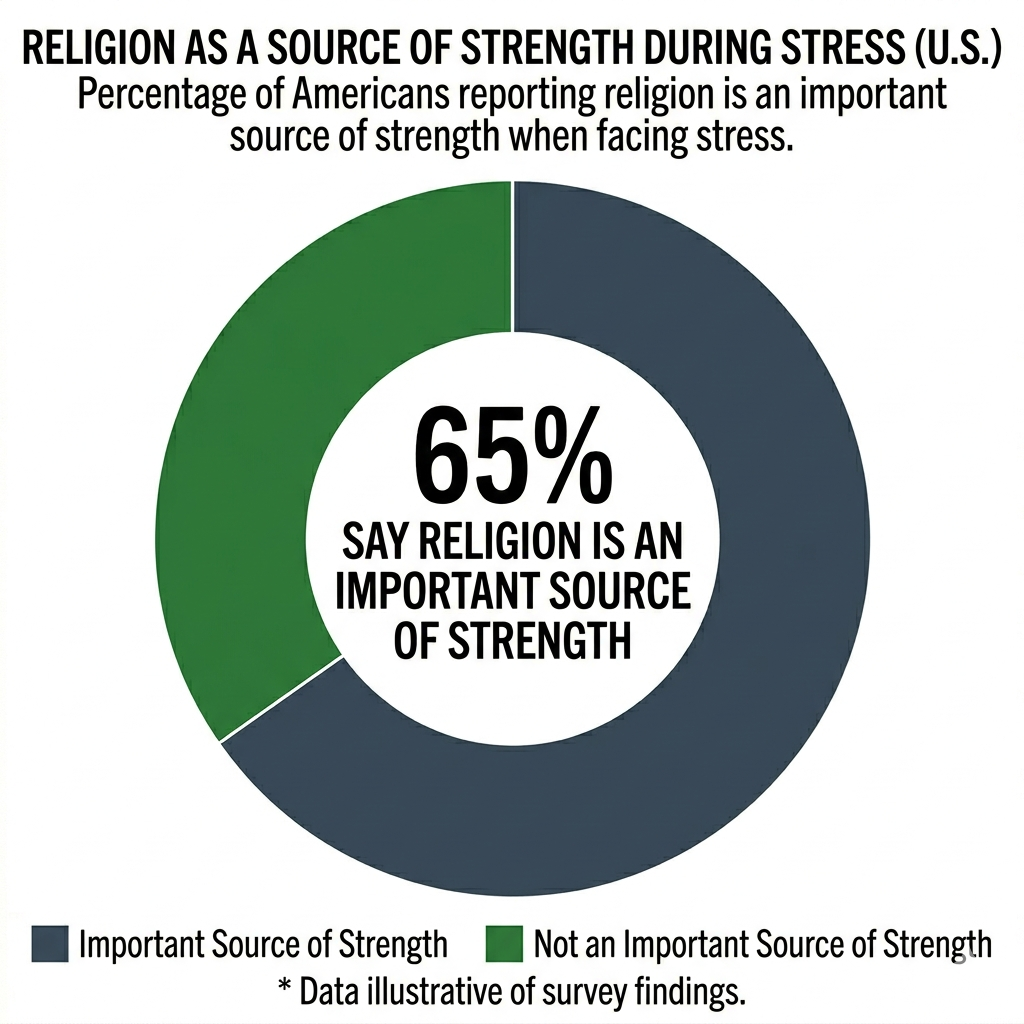
About 65% of Americans say religion is an important source of strength during stress.
Research from the American Psychological Association shows that religion can help people cope with stress.
Many people use prayer or faith as a way to manage difficult situations. This is often called “religious coping” in psychology research.
Studies show that positive religious coping is linked to lower stress levels. It can also reduce feelings of anxiety during hard times.
For example, people who rely on faith often report feeling more calm and supported.
14. Christians have Greater resilience in adversity
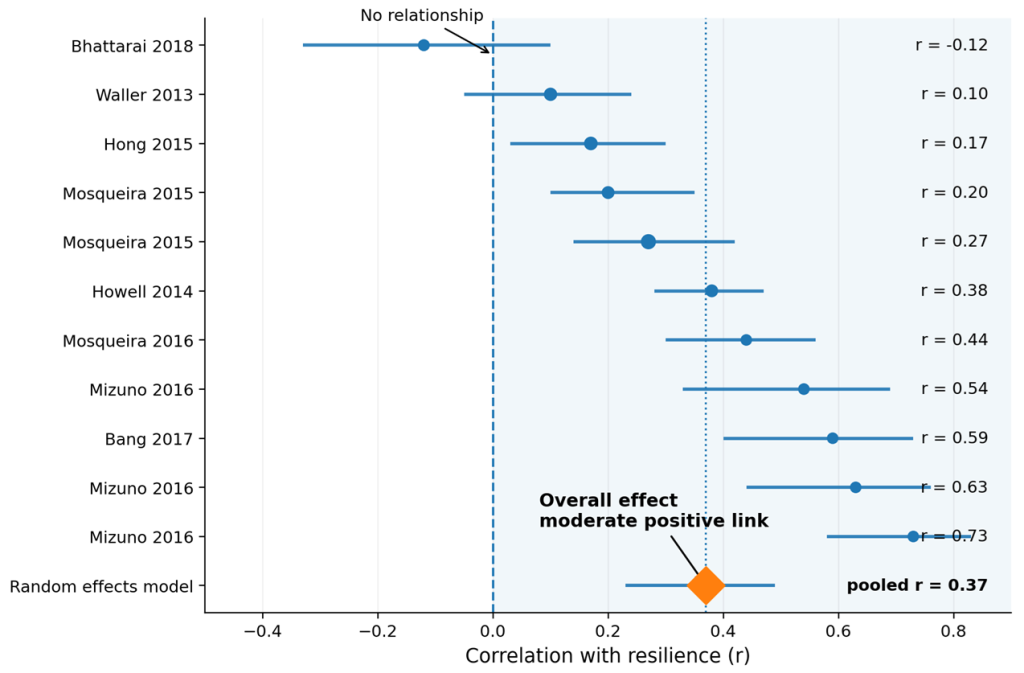
Research published in the Journal of Religion and Health shows a clear link between religion and resilience.
Resilience means the ability to recover from stress or adversity.
A large meta-analysis found a moderate positive correlation (r = 0.40) between religiosity and resilience. This means people with stronger religious or spiritual beliefs tend to be more resilient.
Religion may help people reframe difficult situations in a more positive way.
13. Christians have More social support
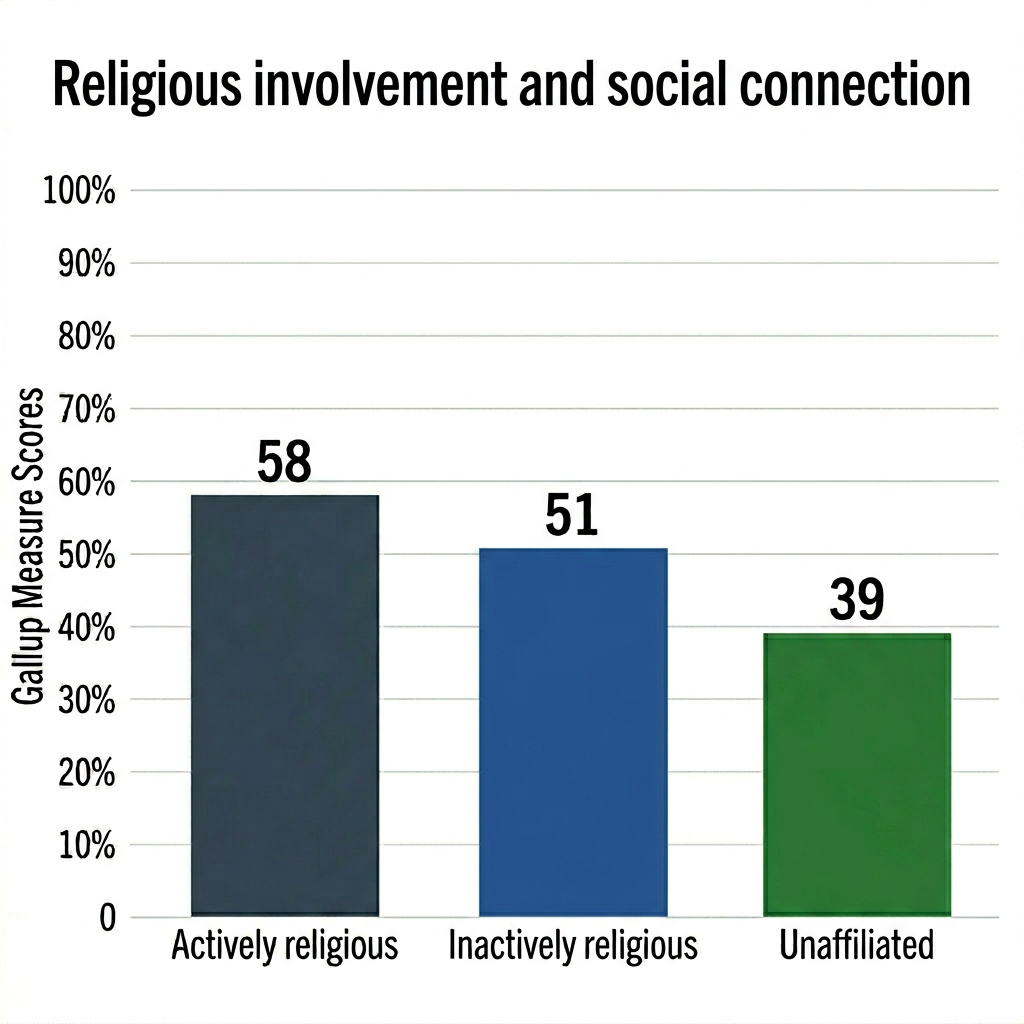
Research from Pew Research Center shows a clear link between religion and social connection.
Actively religious people are more involved in community groups.
About 58% of actively religious Americans belong to at least one nonreligious organization.
This compares to 51% of inactively religious people. Among unaffiliated people, the number drops to 39%.
It shows that religious people are more socially connected beyond church settings.
12. Christians have Stronger Sense of Belonging and Lower Loneliness
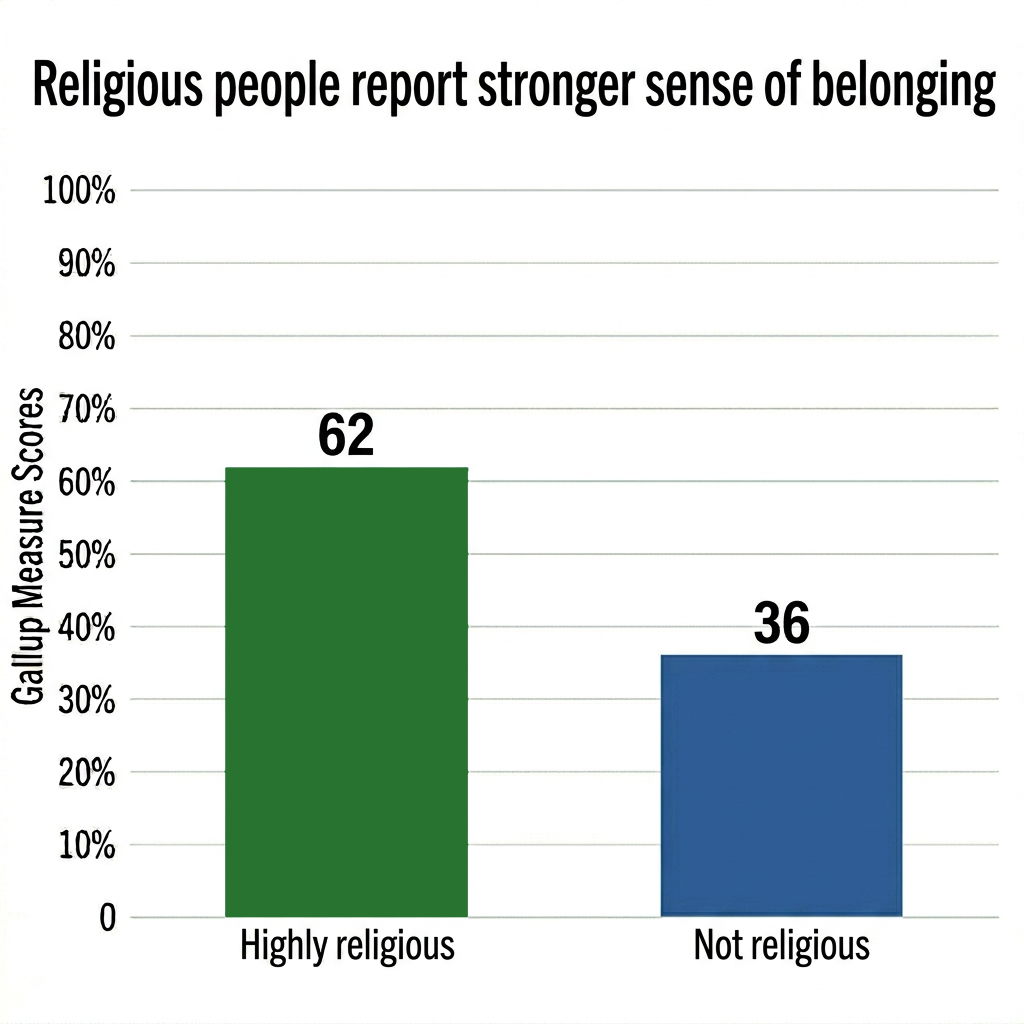
Research from Harvard University shows that religious involvement is tied to stronger feelings of belonging. which directly relates to lower loneliness.
In a Harvard Youth Poll, 62% of highly religious young people say they feel a strong sense of community belonging.
Among non-religious young people, only 36% say they feel that same sense of belonging
11. Christians have More Stable Families
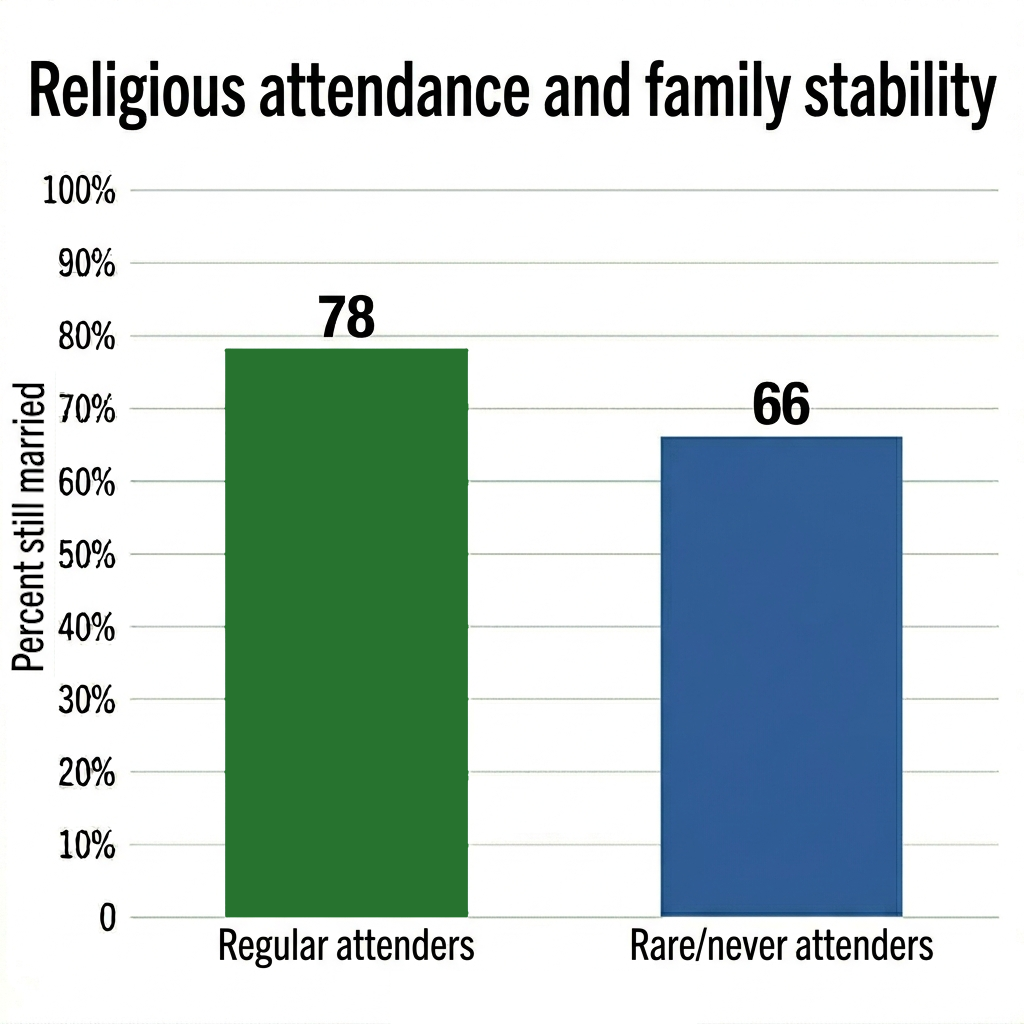
Research from the Institute for Family Studies shows a strong link between religion and family stability.
People who attend religious services regularly are more likely to have stable family structures.
For example, about 78% of regularly attending married parents are still married, compared to 66% of those who rarely or never attend.
Religious couples also report higher levels of relationship satisfaction. They are more likely to describe their marriages as “very happy.”
Regular attendance is also linked to lower rates of family breakdown over time.
10. Higher marriage rates
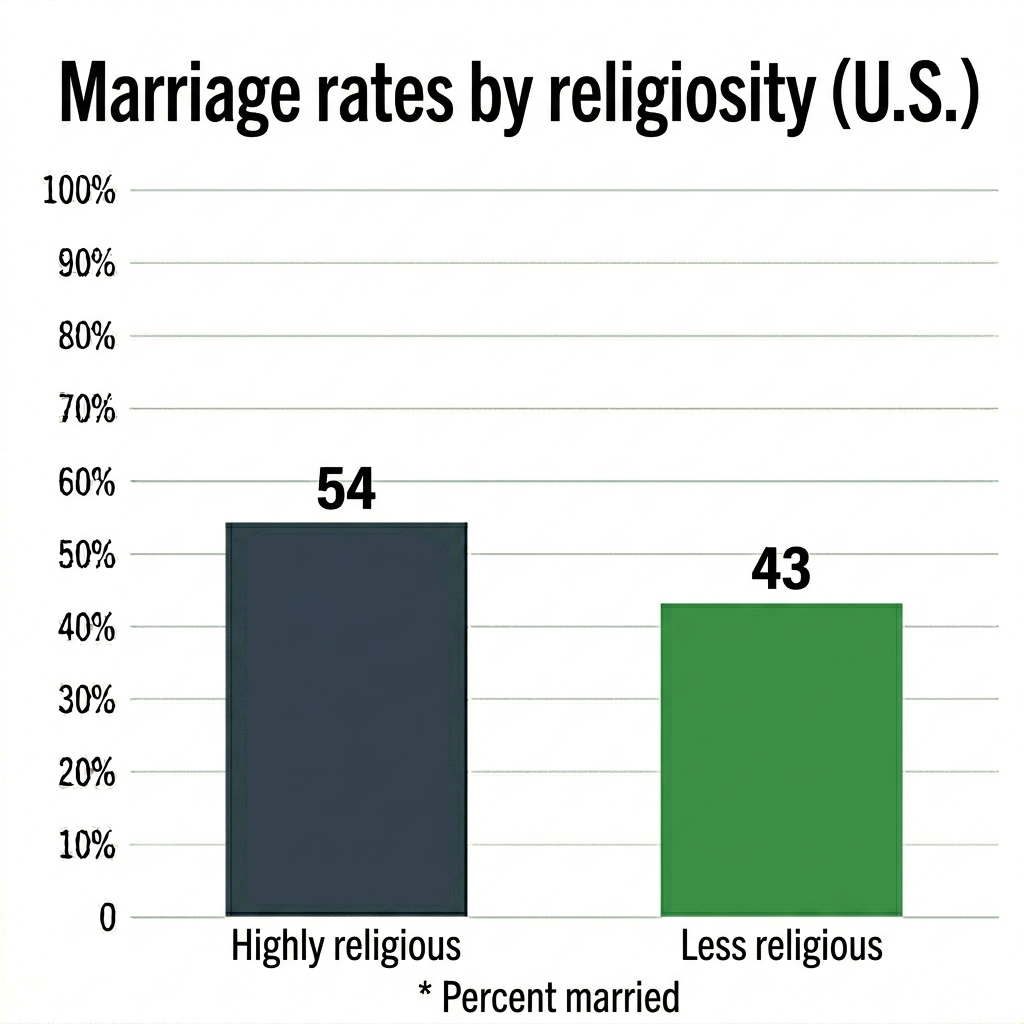
Research from Pew Research Center shows that religious people are more likely to be married.
In the United States, about 54% of highly religious adults are married. By comparison, about 43% of less religious adults are married.
Among people with no religious affiliation, the number is even lower.
Pew also finds that religious people tend to marry earlier and stay married longer.
9. Lower Divorce Rates
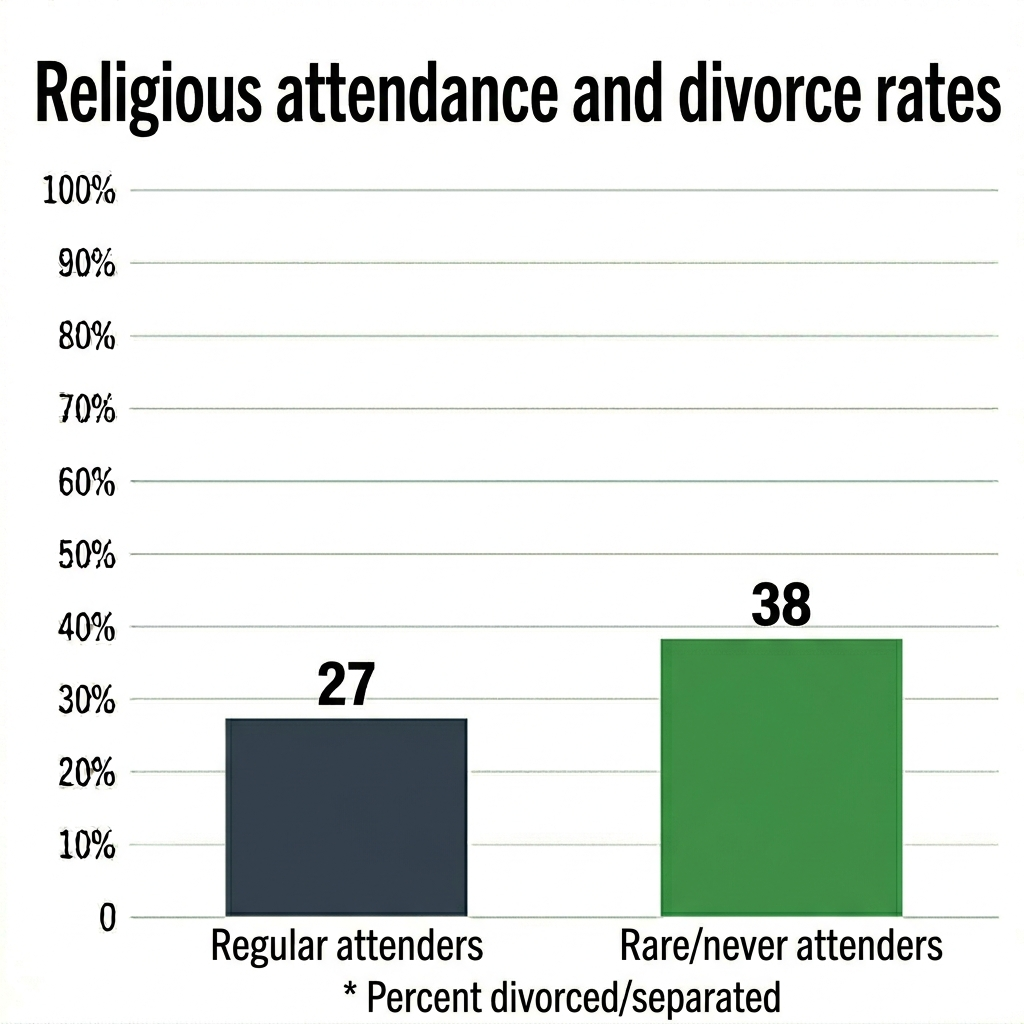
Couples who attend religious services regularly are less likely to divorce.
One major study found that frequent attenders had about a 50% lower risk of divorce compared to those who never attend.
The difference is strongest among those who attend services consistently. In contrast, people who identify as religious but rarely attend do not show the same benefit.
This suggests that active participation, not just belief, matters most.
8. Regular Church-Goers give more to Charity
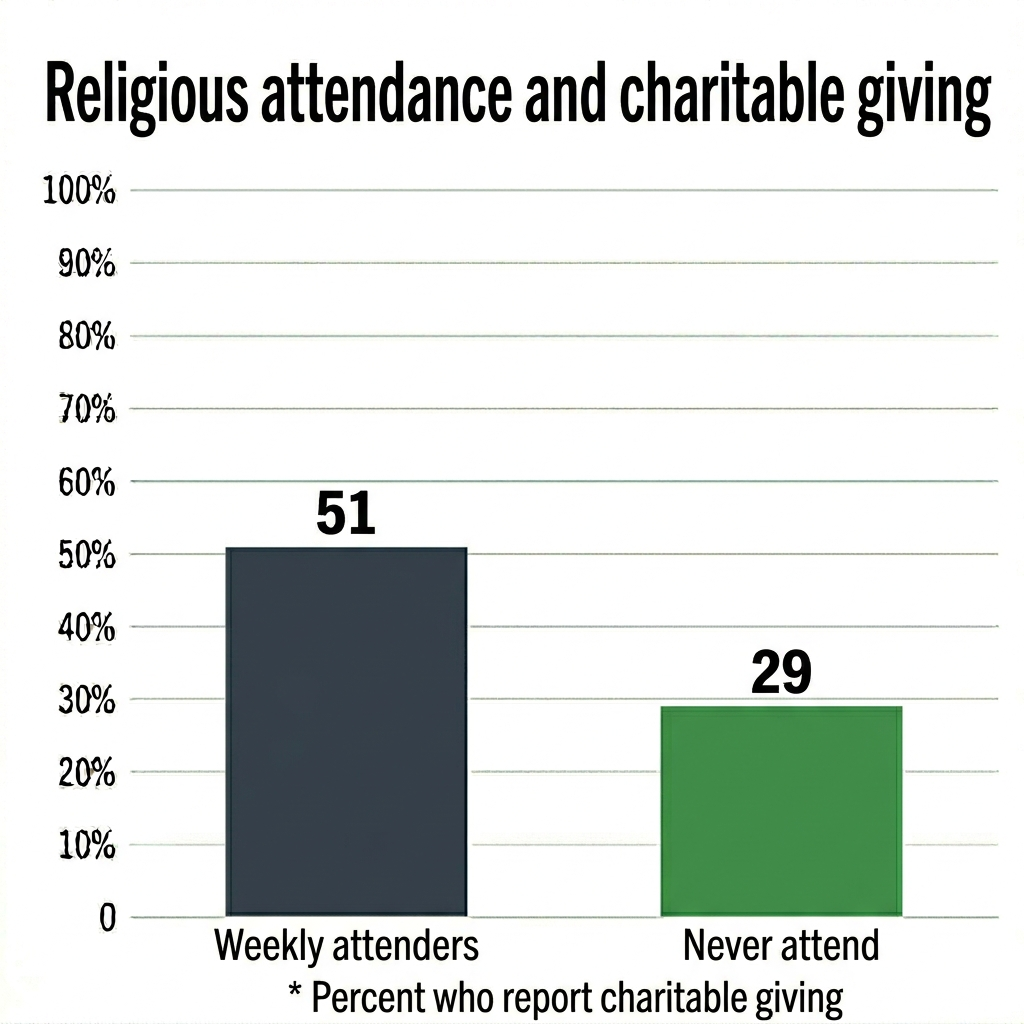
People who attend religious services regularly are more likely to donate to charity.
In one large study by the journal Nature, it was found that about 51% of people who attend services more than once per week give to charity.
By comparison, only 29% of people who never attend services give.
This creates a large 22-point gap between the two groups.
The data suggests that regular religious participation encourages generosity.
Interestingly, this giving includes both religious and nonreligious causes.
7. Religious people volunteer more
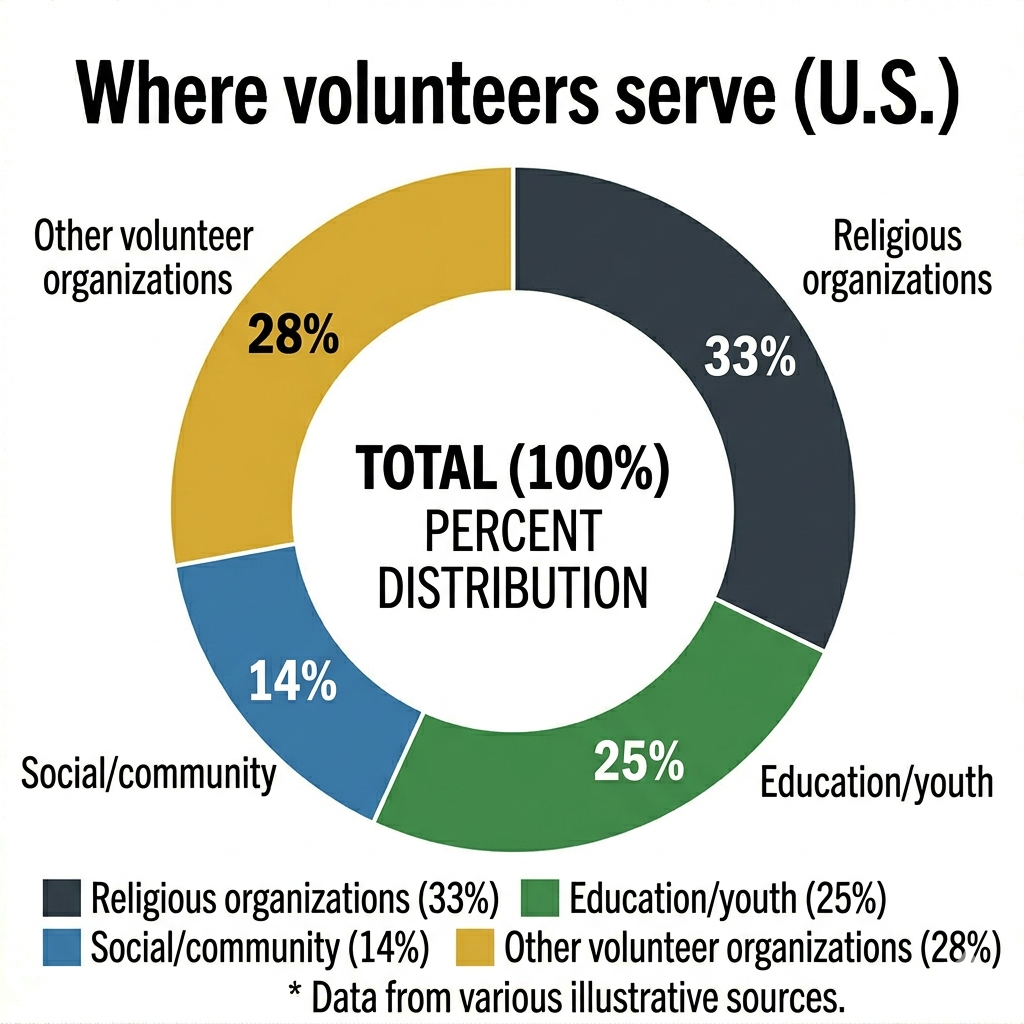
People who are involved in religious communities are more likely to volunteer their time.
In fact, about one-third (33%) of all volunteers serve through religious organizations.
This makes religious groups the largest single category for volunteering.
Across all demographics, volunteers are most likely to serve through religious organizations rather than any other type.
This shows that a large share of volunteering is tied directly to religion.
It also suggests that religious communities play a key role in organizing service.
6. Stronger Sense of Impact in the Community
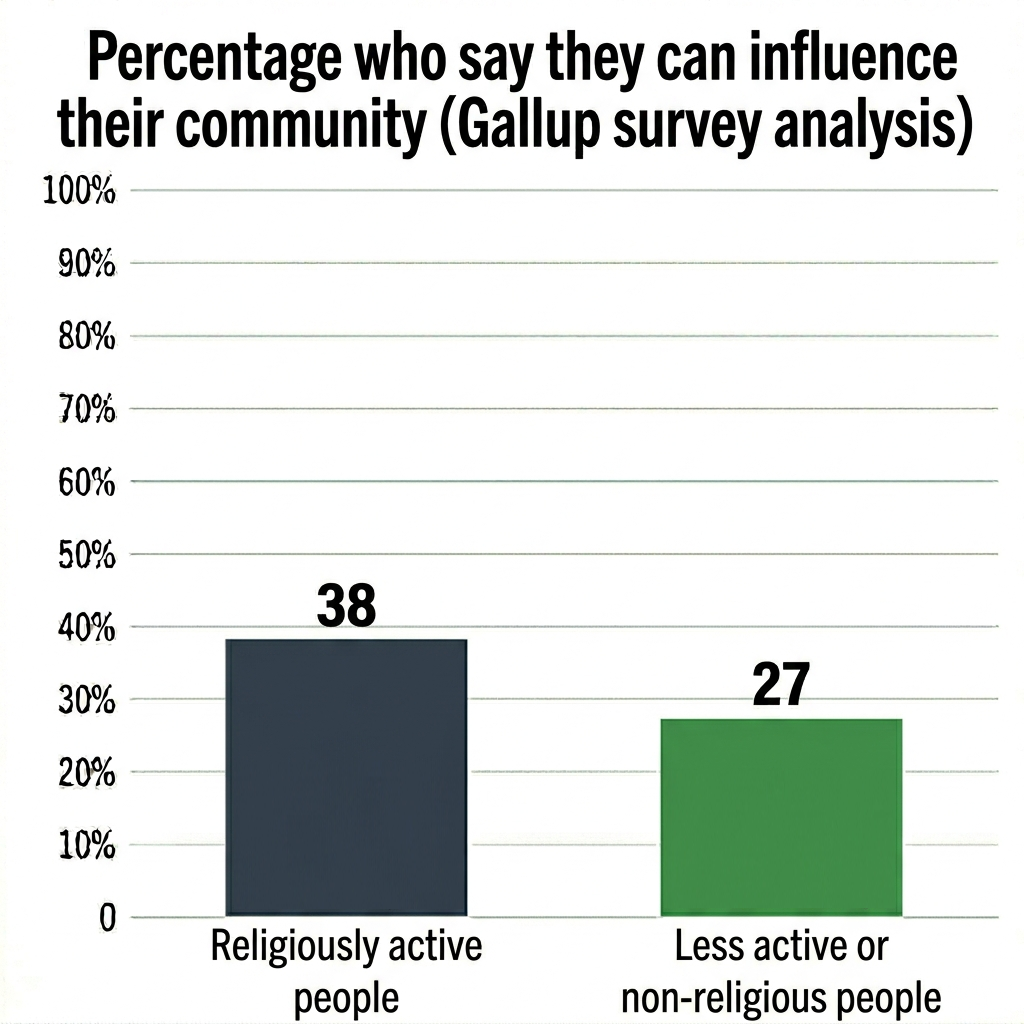
Research from Pew Research Center shows that religious people are more likely to feel they can make a difference.
This reflects a mindset of agency and personal impact, based on their faith that they are carrying out God’s work.
About 38% of religiously active people say they can influence their community. By comparison, only 27% of less active or non-religious people say the same.
This creates an 11-point gap in perceived impact.
It suggests that religious involvement builds confidence in shaping the world around you. People who feel they can make a difference are more likely to take action.
5. Longer Life Expectancy
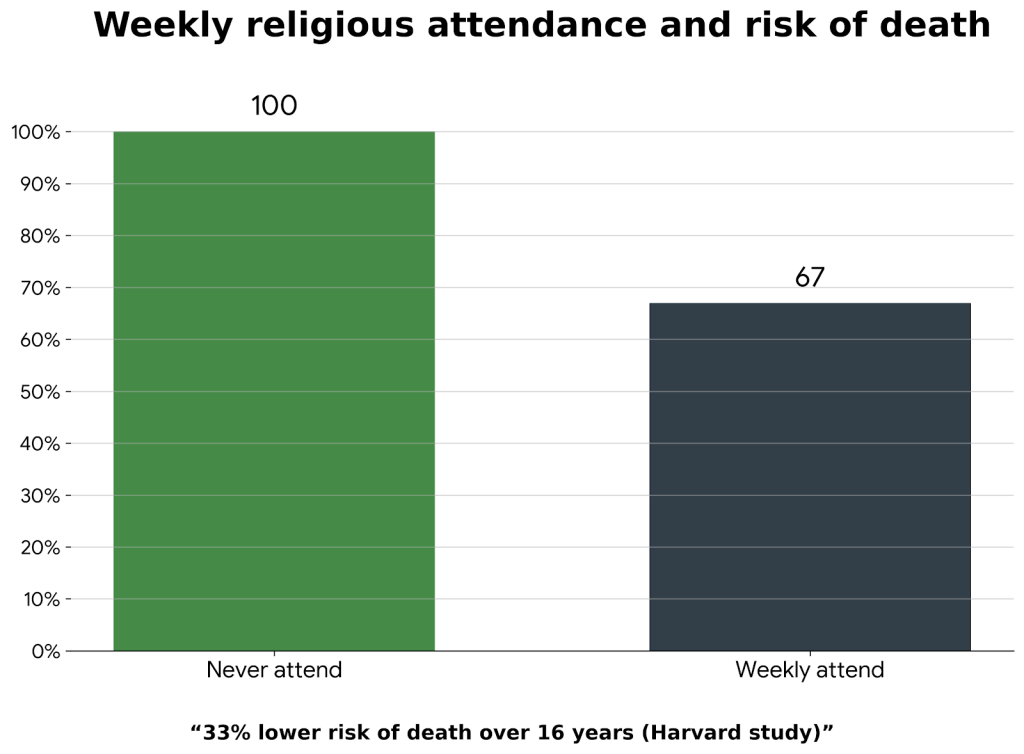
Research from the Harvard T.H. Chan School of Public Health shows a strong link between religion and physical health.
In one major study, women who attended services more than once per week had a 33% lower risk of death over 16 years. This was compared to women who never attended services.
Regular attenders also showed lower rates of cardiovascular disease and other health risks.
Researchers suggest this may be due to social support and healthier behaviors. It may also be linked to lower stress and stronger coping systems.
4. Better Recovery from Depression and Illness
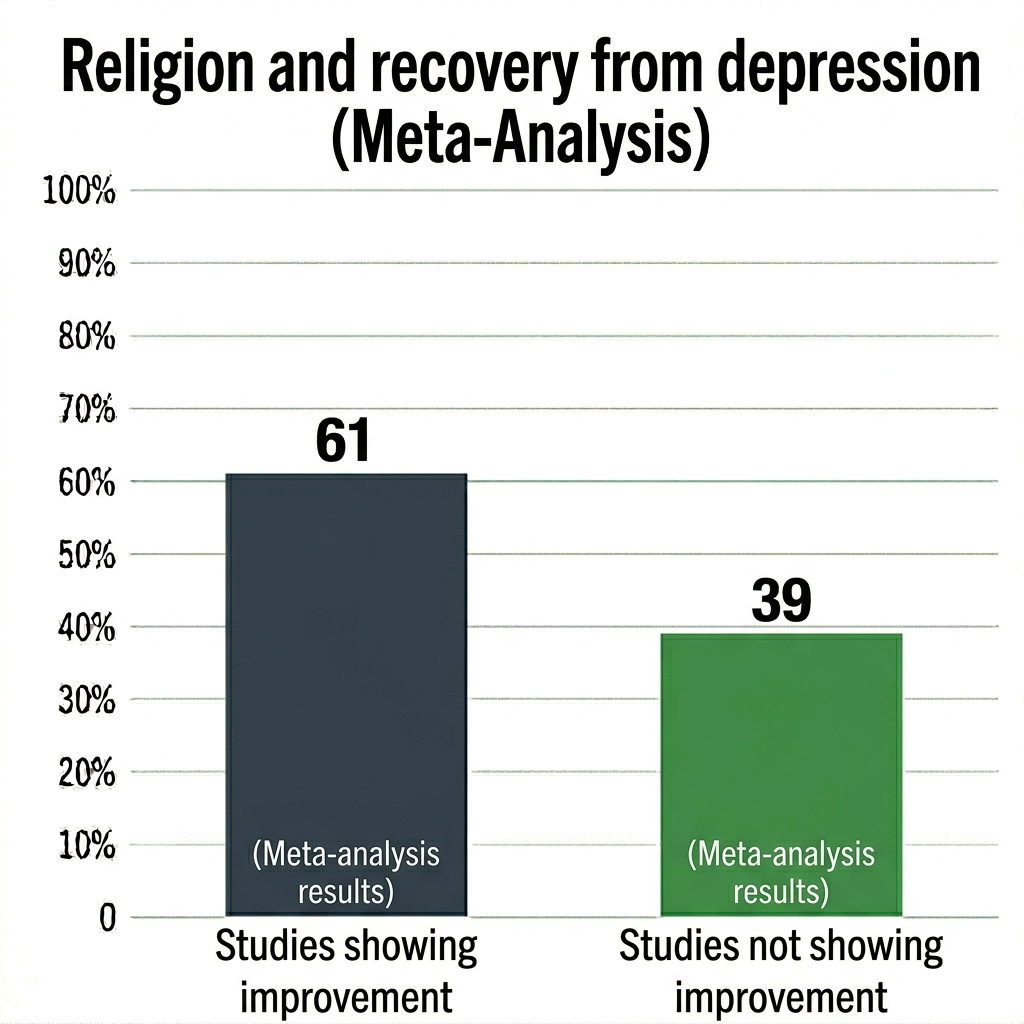
Most studies (about 61%) find that religious involvement is linked to better recovery from depression and illness.
Patients who are religious or spiritual often report better coping during recovery.
In Mayo Clinic surveys, more than 80% of patients say they rely on religion or spirituality when dealing with serious illness.
Studies also find that patients who use spiritual coping report better emotional adjustment during recovery. This includes lower stress and improved mental well-being.
3. Higher levels of Gratitude
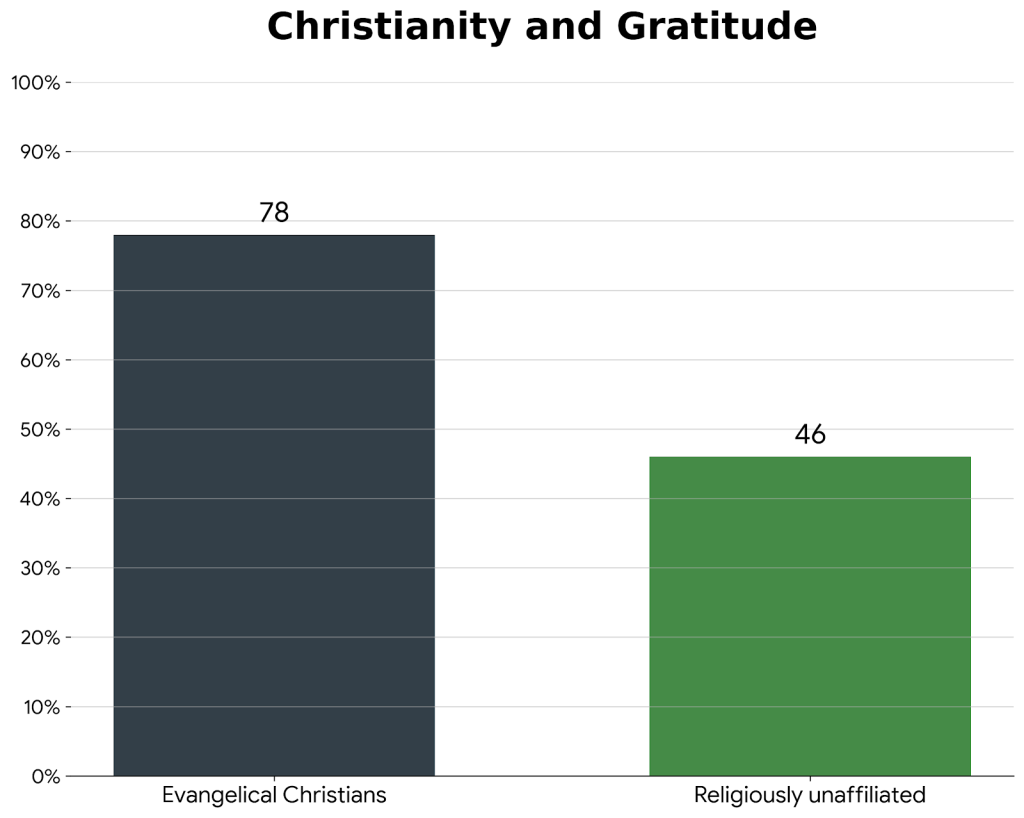
Research from Pew Research Center shows a strong link between religion and gratitude.
About 78% of evangelical Christians say they feel strong gratitude at least weekly. By comparison, only 46% of religiously unaffiliated people say the same.
This creates a large 32-point gap in gratitude levels.
It suggests that religious belief is closely tied to feeling thankful, and practices like prayer and worship may reinforce gratitude over time.
2. Higher forgiveness levels
Research published in the Journal of Positive Psychology and related studies shows a measurable link between religion and forgiveness. in their study, religiosity had a significant positive effect on forgiveness (b ≈ 0.35 total effect).
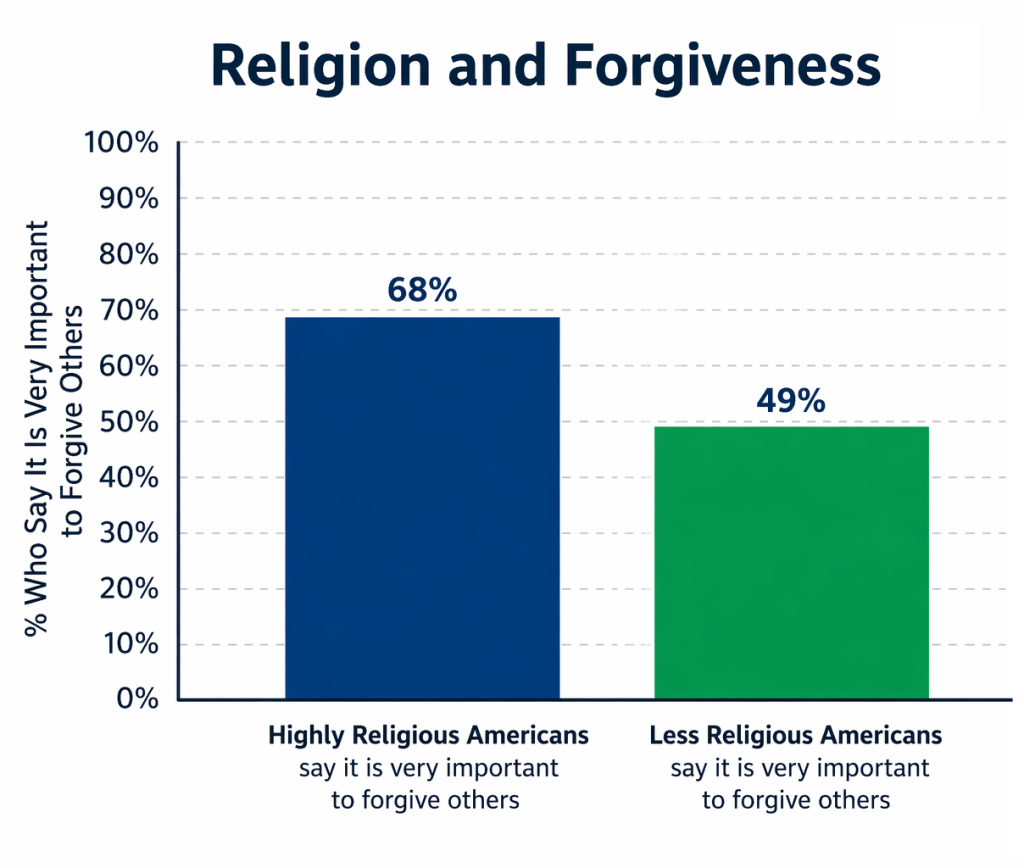
Similarly, Pew Research Center found that religious people are more likely to say forgiveness is very important.
About 68% of highly religious Americans say it is very important to forgive others. By comparison, about 49% of less religious Americans say the same.
1. Christians are Optimistic and Thriving
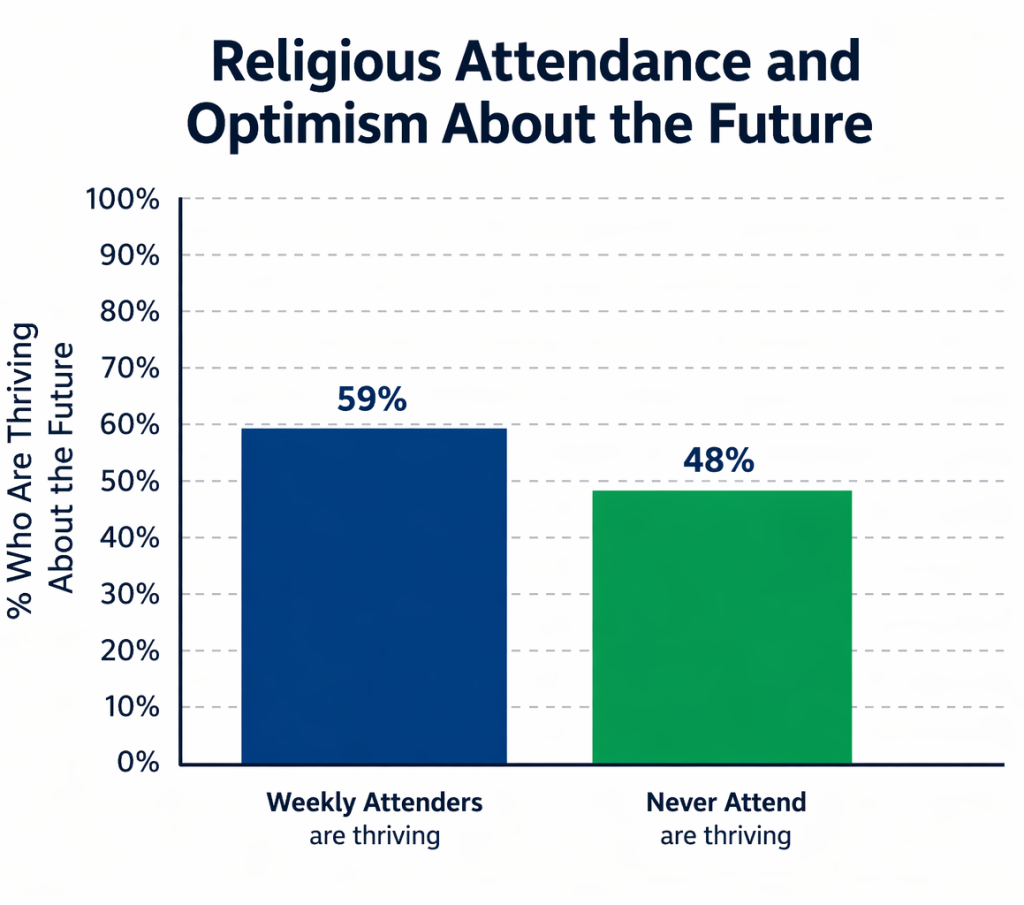
Research from Gallup shows a strong link between religion and optimism.
Gallup measures optimism through its “life evaluation” system, which asks people to rate their present and future life.
People who attend religious services weekly are more likely to be classified as “thriving.”
About 59% of weekly attenders are thriving, meaning they rate their future positively.
By comparison, only about 48% of those who never attend are thriving. This creates an 11-point gap in optimism about the future.

Dr. Chris Drew is the founder of the Helpful Professor. He holds a PhD in education and has published over 20 articles in scholarly journals. He is the former editor of the Journal of Learning Development in Higher Education. [Image Descriptor: Photo of Chris]